
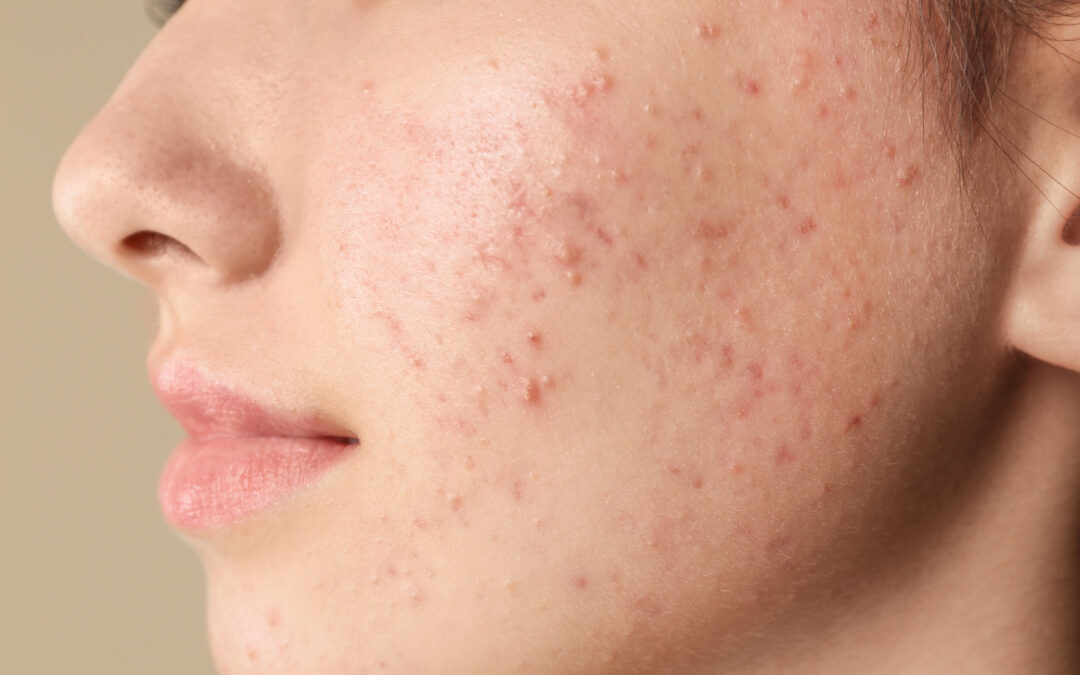
Not all acne is the same, and treating it like it is can lead to flare-ups, scarring and wasted time. What looks like a breakout could be hormonal, bacterial or fungal in nature. Each has its own triggers, patterns and treatment options.
This article breaks down the key differences between fungal, bacterial and hormonal acne, so you can take the next step towards the right treatment.
A quick note on the terms used in this article. In dermatology, “hormonal acne” and “bacterial acne” are descriptive shorthand rather than strict medical categories. All inflammatory acne involves hormones, sebum (oil), skin cell turnover and bacteria to varying degrees. We use the shorthand because it is how most patients describe what they are seeing, but a clinical assessment is the only way to confirm what is driving your skin. Fungal acne, by contrast, is a separate condition with a different cause, covered further down in this post.
What is hormonal acne?
Hormonal acne is the term used when hormonal fluctuations are the main driver of breakouts. Higher levels of androgen hormones increase sebum (oil) production, which contributes to blocked pores and inflammation. This pattern typically appears around the jawline, chin and lower cheeks. Hormonal breakouts can be deep and slow to resolve, and they often leave post-inflammatory marks behind. They can include whiteheads, but the deeper cystic presentation is more characteristic.
What causes hormonal acne?
Common drivers include the menstrual cycle, perimenopause, pregnancy, starting or stopping hormonal contraception and conditions such as polycystic ovary syndrome (PCOS). Stress and sleep disruption can also contribute, partly through their effect on cortisol and other hormones that influence sebum production. Dietary factors may modulate severity in some individuals: there is research supporting an association between high-glycaemic-index foods, skim milk and acne severity, although the effect varies between people.
Hormonal breakouts often do not respond fully to topical treatments alone, because the driver starts beneath the surface. A medical assessment is usually needed to identify what is going on and to discuss the right plan. Depending on individual factors, treatment options may include hormonal contraception, anti-androgen medication, topical retinoids or a combination of approaches. Specific medications are discussed and prescribed during a consultation with your doctor.
What is bacterial acne?
“Bacterial acne” is the common term for what dermatologists call acne vulgaris when the inflammatory component is most visible. It presents as red, inflamed spots, including papules, pustules and sometimes nodules or cysts. These breakouts can appear anywhere oil glands are concentrated: face, chest, back or shoulders.
What causes bacterial acne?
All acne vulgaris involves Cutibacterium acnes (formerly Propionibacterium acnes), a bacterium that lives naturally on the skin. When pores become blocked by oil and dead skin cells, C. acnes can multiply and trigger inflammation in the follicle. The “bacterial” label tends to be used when inflammation is the main visible feature, rather than when bacteria are the only cause. Hormones, follicular changes and sebum production are all part of the picture.
This type of acne is most common during puberty but can occur in adults due to product build-up, skin barrier disruption, certain medications or environmental factors. Heavy or occlusive skincare and makeup can aggravate it.
Mild presentations can often be managed with a consistent skincare routine using non-comedogenic products. For persistent or moderate-to-severe acne, additional treatment may be recommended. Options can include topical antibiotics, oral antibiotics, topical retinoids or in-clinic treatments such as LED light therapy and chemical peels. Any prescription treatment is decided by your doctor based on your skin and your medical history.
What is fungal acne?
Despite the name, fungal acne is not acne. It is a separate skin condition called Malassezia folliculitis (sometimes still called Pityrosporum folliculitis in older literature), caused by an overgrowth of Malassezia yeast in the hair follicles. Malassezia is a yeast that lives naturally on the skin, but in certain conditions it can multiply and cause an inflammatory reaction in the follicle.
Fungal acne typically presents as small, uniform, itchy bumps in clusters, most often across the upper chest, shoulders, back and forehead. The bumps look more alike than they do in bacterial acne, which tends to vary in size and type. Itching is a common feature that helps distinguish it from acne vulgaris.
What causes fungal acne?
Common triggers include warm and humid weather, prolonged sweating in tight or occlusive clothing, recent or current courses of antibiotics, oral or topical corticosteroids, and any condition that suppresses the immune response. It is more common in warmer months and in warmer climates.
Standard acne products often do not help fungal acne and can make it worse, because the underlying cause is a yeast rather than C. acnes bacteria. Malassezia folliculitis responds to antifungal treatment. Depending on severity and presentation, this may involve topical antifungal preparations or, for persistent cases, oral antifungal medication. Diagnosis is best confirmed by a doctor, because the bumps can closely resemble acne vulgaris.
Hormonal, bacterial and fungal acne at a glance
A short comparison of how these three patterns differ. As above, hormonal and bacterial acne are descriptive labels rather than separate conditions, they sit on a spectrum of acne vulgaris. Fungal acne is a different condition entirely.
| Hormonal acne | Bacterial acne | Fungal acne | |
|---|---|---|---|
| Main driver | Hormonal fluctuations increasing sebum production | Inflammation involving C. acnes bacteria in blocked pores | Overgrowth of Malassezia yeast in hair follicles |
| Typical look | Deeper, often cystic spots; can include whiteheads | Red papules, pustules, blackheads, sometimes nodules | Small uniform itchy bumps in clusters |
| Common locations | Jawline, chin, lower cheeks | Face, chest, shoulders, back | Upper back, shoulders, chest, forehead |
| What typically helps | Medical assessment; may include topical or oral options addressing the hormonal driver | Skincare adjustments; may include topical or oral options; in-clinic treatments such as LED or peels | Antifungal treatment; standard acne products often do not help and can worsen it |
Book a consultation at Advantage Skin Clinic
Hormonal acne, bacterial acne and fungal acne look similar on the surface but are driven by very different things underneath. The wrong treatment for the wrong type can make breakouts worse and prolong the problem. If your skin has not responded to what you have been doing for the last three to six months, a consultation is the right next step.
At Advantage Skin Clinic in Corrimal, our doctors and dermal clinicians assess and manage acne as part of our skin consultations service for patients across Wollongong and the Illawarra. After a clinical assessment, your plan may combine at-home skincare adjustments, medical management where appropriate, and in-clinic treatments such as LED light therapy, chemical peels or the Alma Clear Skin Pro laser.